
How Do You Choose the Right Fall Protection Equipment for a Jobsite?
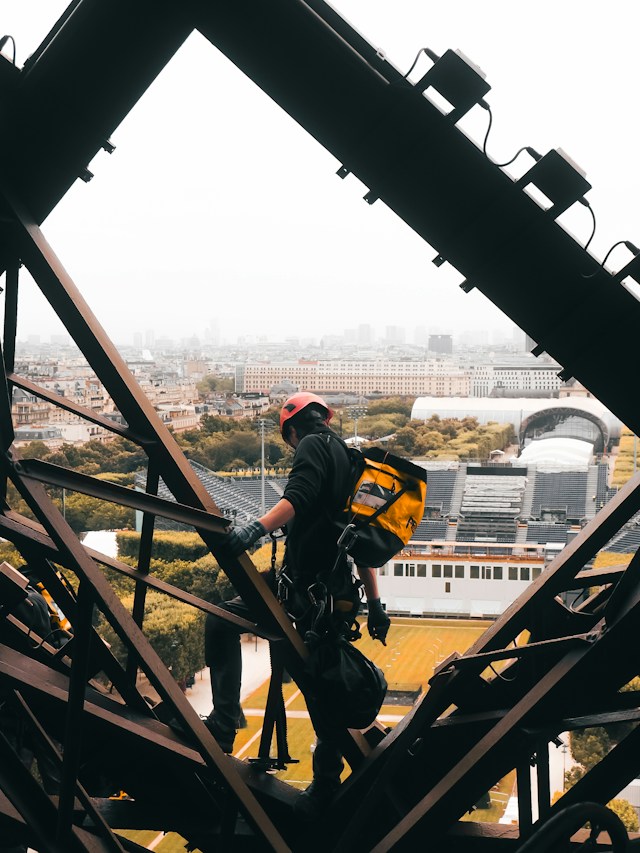
Choosing the right fall protection equipment starts with understanding the jobsite hazards, not picking out a safety harness. Employers must consider where employees will work, how they could fall, which OSHA regulations apply, and whether the hazard can be eliminated or controlled before relying on personal fall protection equipment.
The safest equipment choice is a complete fall protection system designed for the specific task. That may involve guardrails, a travel restraint system, or a personal fall arrest system. Each has different requirements for anchorage, equipment compatibility, fall clearance, worker training, and emergency rescue.
For construction contractors, roofing crews, maintenance supervisors, and safety managers throughout New Mexico, selecting equipment without evaluating these conditions can leave employees exposed even when they are wearing protective gear.
Start with the Jobsite Hazard, Not the Harness
Before purchasing fall protection equipment, examine the work employees will perform and the conditions surrounding it.
A roofer working near the edge of a commercial building faces different hazards than a steelworker installing beams or a maintenance technician servicing equipment on an elevated platform.
The right equipment depends on how employees move, the available working space, the location of fall hazards, and the structures available for installing protective systems.
A useful starting point is to answer five questions:
- Where could an employee fall, and what would the employee strike?
- Which OSHA standard applies to the work?
- Can the fall hazard be eliminated or prevented without relying on personal fall arrest equipment?
- Are suitable anchorage, clearance, and compatible equipment available?
- Who will inspect the system, train employees, and carry out a rescue if a fall occurs?
These questions help employers determine whether a proposed system can protect workers under actual jobsite conditions.
Identify the Task and Applicable OSHA Standard
OSHA fall protection requirements vary depending on the industry, activity, and hazard.
For construction, 29 CFR 1926 Subpart M establishes requirements for many fall protection situations. Section 1926.501 addresses when protection is required, while Section 1926.502 establishes criteria for different protective systems.
General industry employers must consider applicable provisions of 29 CFR 1910.28, 1910.29, and 1910.140.
Other rules may apply to scaffolds, ladders, aerial lifts, or specialized work.
The familiar six-foot construction threshold does not apply universally. Some activities require protection at different heights, and particular hazards may require protection regardless of the usual height threshold.
Employers should identify the governing standard before deciding which equipment is appropriate.
Which Type of Fall Protection Is Appropriate?
Three common approaches are guardrail systems, travel restraint systems, and personal fall arrest systems.
They are not interchangeable. Each protects employees in a different way.
| Fall protection approach | Primary purpose | Important jobsite considerations |
| Guardrail system | Provides a physical barrier to prevent falls | Proper installation, structural support, openings, applicable OSHA criteria |
| Travel restraint system | Prevents a worker from reaching a fall hazard | Anchorage, line length, movement limits, edge access |
| Personal fall arrest system | Arrests a fall after it begins | Anchorage, fall clearance, swing falls, equipment compatibility, rescue |
Guardrails and Other Collective Protection Systems
Guardrails are often a practical option when employees repeatedly work near exposed edges.
A properly designed and installed guardrail provides protection without requiring each worker to connect to a personal fall arrest system.
Consider a commercial roof where several maintenance employees need regular access to rooftop equipment. Suitable permanent or temporary guardrails may provide an effective way to separate workers from exposed edges.
Guardrail systems must meet the applicable OSHA criteria for their use, including requirements involving dimensions, strength, and construction.
Not every railing qualifies as a compliant fall protection guardrail. A decorative railing, temporary barrier, or rooftop parapet should not be assumed adequate without evaluation.
Other methods, such as covers over floor openings, may be appropriate for particular hazards.
Travel Restraint Systems Prevent Workers from Reaching the Edge
A travel restraint system limits an employee’s movement so the employee cannot reach a location where a fall could occur.
For example, a worker performing rooftop maintenance might use a properly designed restraint system that allows access to the work area but prevents reaching an unprotected roof edge.
The length of the connecting equipment, anchorage location, employee movement, and roof geometry all affect whether the system will work.
A restraint system that allows the worker to reach the edge is not providing the intended protection.
Restraint and arrest systems may use some similar-looking components, but they perform different functions. Equipment must be suitable for its intended use and comply with applicable requirements.
For a more detailed explanation, see the difference between fall restraint and fall arrest.
Personal Fall Arrest Systems Stop a Fall After It Begins
A personal fall arrest system, commonly called a PFAS, is designed to stop an employee who has fallen from an elevated position.
A complete system typically includes a full-body harness, an anchorage, an anchorage connector where needed, and compatible connecting equipment such as an energy-absorbing lanyard or self-retracting lifeline.
These components must function together.
An employee wearing a harness without being properly connected to a suitable anchorage is not protected by a functioning fall arrest system.
Even when all the equipment is present, the system may be unsuitable if there is insufficient clearance below the worker or if the employee could swing into a nearby structure.
Employers should understand how personal fall arrest systems protect construction workers before selecting components.
How Do You Match Harnesses, Connectors, and Lifelines?
Fall protection components should be selected as parts of one compatible system, not as separate products chosen only by price or availability.
A harness, lanyard, self-retracting lifeline, and anchorage connector may each meet relevant requirements individually but still be unsuitable when combined.
Choose a Harness That Fits the Worker and the Task
A full-body harness must fit the employee correctly and be appropriate for the intended fall protection application.
An improperly fitted harness can affect how forces are distributed during fall arrest. Loose straps, incorrect adjustment, or unsuitable attachment points can also interfere with safe use.
Employers should consider the worker’s size, the weight of tools and equipment, the type of work being performed, and the manufacturer’s stated limitations.
Workers must understand how to put on, adjust, inspect, and connect their harnesses.
A harness designed for one application should not automatically be assumed suitable for another. The manufacturer identifies approved attachment points and permitted uses.
Select the Appropriate Connecting Equipment
Connecting equipment links the worker’s harness to the anchorage system.
Common options include energy-absorbing lanyards and self-retracting lifelines.
An energy-absorbing lanyard uses a device designed to limit arrest forces during a fall. However, the distance needed to stop a fall may make some lanyards unsuitable where clearance is limited.
A self-retracting lifeline can limit free-fall distance in certain configurations, but its performance depends on the model, anchorage position, permitted orientation, and other conditions.
Some self-retracting lifelines are designed for overhead use, while others are specifically rated for certain leading-edge applications.
A product labeled as a self-retracting lifeline is not automatically approved for every anchorage location or edge condition.
The manufacturer’s instructions must be reviewed for the exact equipment and intended configuration.
Make Sure Connectors Are Compatible
Snap hooks, carabiners, D-rings, and anchorage connectors must be compatible with the components to which they attach.
A connector may appear secure but still be capable of accidental disengagement when connected to an unsuitable attachment point.
OSHA’s construction fall protection criteria address connector compatibility and prohibit certain connections unless the equipment is specifically designed for them.
Employers should also avoid combining components from different manufacturers without verifying that the complete arrangement is permitted and compatible.
The correct question is not simply whether the pieces connect. It is whether they are designed and approved to function safely together.
Can the System Work with the Available Anchorage and Fall Clearance?
Anchorage and fall clearance can determine whether a proposed personal fall arrest system is appropriate.
An anchorage must be suitable for the forces and direction of loading that the system may create. It also must meet the applicable regulatory criteria.
For construction personal fall arrest systems, 29 CFR 1926.502(d)(15) establishes anchorage requirements. It allows specified strength-based criteria or an alternative involving a qualified person’s design, installation, and use of a complete system that maintains the required safety factor.
This does not mean that any structural beam, rooftop unit, pipe, or railing can serve as an acceptable anchorage.
The structure and attachment method must be evaluated for the actual system and loading conditions.
Why Fall Clearance Changes Equipment Selection
Fall clearance is the space required beneath a worker for a fall arrest system to stop a fall before the worker strikes a lower level or obstruction.
The calculation can involve the length of the connecting equipment, free-fall distance, deceleration distance, harness movement, the worker’s position, and an appropriate safety allowance.
Manufacturer instructions and the system configuration determine the values that must be considered.
For example, a worker on an elevated platform might be connected to an energy-absorbing lanyard. If a lower platform is only a short distance beneath the employee, the available clearance may be inadequate for that configuration.
The employee could strike the lower platform before the fall arrest system finishes stopping the fall.
In that situation, a different approved system or work method may be necessary.
A competent or qualified person, as appropriate to the task, should evaluate the conditions rather than assuming that a shorter lanyard or different connector will solve the problem.
For a closer look at the factors involved, read how to calculate fall clearance distance before using a fall arrest system.
Consider Swing Falls, Sharp Edges, and Leading Edges
Fall clearance is not always a straight vertical measurement.
A swing fall can occur when a worker falls while positioned horizontally away from the anchorage. The worker may swing toward the point directly beneath the anchor and strike nearby equipment or structural members.
The greater the horizontal offset, the more important the swing-fall assessment becomes.
Sharp edges create another concern. A lifeline or lanyard may contact an edge during a fall, potentially damaging the equipment.
Leading-edge work can involve exposure to edges that are being formed or are otherwise unprotected. Equipment used in these situations must be suitable for the particular edge exposure and permitted configuration.
Workers should not assume that a standard lanyard or lifeline can safely run over any roof edge, steel member, or concrete surface.
Horizontal lifeline systems introduce additional considerations involving system forces, deflection, anchor loading, and fall clearance. Under OSHA’s construction standard, horizontal lifelines must be designed, installed, and used under the supervision of a qualified person as part of a complete personal fall arrest system that maintains the required safety factor.
These systems require more than choosing a cable and attaching it between two convenient points.
What Must the Rescue and Inspection Plan Include?
Equipment selection is incomplete until the employer determines how the system will be inspected, used, and supported during an emergency.
Plan for Prompt Rescue Before Work Begins
A personal fall arrest system may stop a fall without returning the employee to a safe working surface.
The worker could remain suspended, unable to climb back onto the structure.
Under OSHA’s construction personal fall arrest requirements, employers must provide for prompt rescue after a fall or assure that employees can rescue themselves.
General industry personal fall protection rules also require prompt rescue provisions.
The rescue plan should reflect the worksite, equipment, access limitations, and employees’ capabilities. It may involve trained rescue personnel and equipment appropriate for the location.
Simply assuming that emergency responders will arrive in time is not a substitute for evaluating how prompt rescue will be accomplished.
Rescue arrangements should be established before employees begin work where a fall arrest system may be needed.
Inspect Equipment Before Use
Harnesses, lanyards, connectors, and lifelines must be inspected as required by the applicable OSHA standards and manufacturer instructions.
Employees should look for conditions such as damaged webbing, cuts, abrasion, corrosion, deformation, damaged stitching, malfunctioning hardware, and deployed energy absorbers.
Inspection also includes checking labels, serviceability, and equipment-specific indicators where applicable.
Damaged or defective equipment must be removed from service.
Workers can review the basic inspection process in How Do You Inspect a Safety Harness Before Use?.
Equipment subjected to fall arrest forces requires special attention. OSHA’s construction rules require affected personal fall arrest systems and components to be removed immediately from service and not used again until a competent person inspects them and determines they are undamaged and suitable for reuse.
Manufacturer instructions may impose additional restrictions, including replacement requirements.
Learn more about whether a harness or lanyard can be reused after stopping a fall.
Train Employees on the Equipment They Will Actually Use
Workers must understand more than the names of fall protection components.
They need instruction appropriate to their duties and the governing standard, including recognizing fall hazards, understanding protective systems, and using and inspecting assigned equipment.
Construction employers should review 29 CFR 1926.503. General industry employers should review 29 CFR 1910.30.
OSHA 10-Hour or 30-Hour Outreach Training can provide general safety awareness, but it does not automatically satisfy every equipment-specific training requirement.
Training should also address changes in equipment, work conditions, or employee understanding when retraining is required.
Two Jobsite Examples That Show Why Equipment Selection Matters
Example 1: Flat-Roof Maintenance in Albuquerque
A maintenance crew needs to service rooftop equipment on a commercial building in Albuquerque. Some equipment is positioned near an unprotected roof edge.
The employer first evaluates the work area, the distance from the edge, and how frequently employees need access.
If suitable guardrails can separate workers from the hazard, they may provide a practical solution without requiring employees to rely on personal fall arrest equipment.
If guardrails are not appropriate, a properly designed travel restraint system may be considered. The employer must verify that the system prevents workers from reaching the fall hazard.
A personal fall arrest system may be another option where permitted, but only after confirming suitable anchorage, clearance, compatibility, and rescue arrangements.
The presence of a roof anchor does not, by itself, establish that a particular harness and lanyard combination is safe.
Example 2: Elevated Steelwork with Limited Clearance
A construction crew is installing steel components above a lower working level.
Workers need to move along an elevated structure, and some anchorage locations are below or to the side of their working positions.
A conventional energy-absorbing lanyard might require more fall clearance than the available space provides.
Anchorage placement could also create swing-fall hazards. Exposed steel edges may introduce additional concerns for the connecting equipment.
Before approving the work, the employer needs an appropriate evaluation of the anchorage, fall arrest equipment, worker movement, clearance, and rescue method.
If no suitable system can be established, the employer must change the work method or provide another compliant protective approach rather than allowing employees to proceed with inadequate equipment.
Employer Fall Protection Equipment Selection Checklist
Before employees begin elevated work, supervisors and safety managers can use the following checklist to guide their review.
Pre-Work Equipment Review 1-8
- Identify the work activity, fall hazards, and applicable OSHA standard.
- Determine whether the hazard can be eliminated or controlled with guardrails or another suitable method.
- Evaluate whether travel restraint can prevent workers from reaching the fall hazard.
- If fall arrest is needed, verify the complete system and all component compatibility.
- Confirm anchorage suitability, available fall clearance, and swing-fall exposure.
- Review leading edges, sharp surfaces, and equipment-specific limitations.
- Inspect equipment and remove defective components from service.
- Establish prompt rescue arrangements and provide required employee training.
This checklist is a starting point for jobsite planning, not a substitute for a site-specific hazard assessment, applicable OSHA requirements, manufacturer instructions, or necessary competent-person and qualified-person evaluations.
Frequently Asked Questions About Fall Protection Equipment
Can a Standard Lanyard Be Used at a Leading Edge?
Not necessarily. A standard lanyard may not be suitable where it could contact a sharp or exposed edge during a fall. Employers must review the manufacturer’s approved uses and ensure that the equipment is appropriate for the specific edge conditions and anchorage arrangement.
Who Determines Whether an Anchorage Is Safe?
Anchorage suitability must be established under the applicable OSHA requirements. Depending on the system and design method, this may involve a qualified person, engineering evaluation, or other appropriate assessment. A supervisor should not assume that a structural component is an approved anchorage merely because it appears strong.
Can Workers Mix Harnesses, Lanyards, and Connectors from Different Manufacturers?
Only when the components are compatible and their combined use complies with applicable requirements and manufacturer instructions. Equipment that physically connects may still be unsuitable because of connector geometry, loading conditions, or other limitations.
What Happens If There Is Not Enough Fall Clearance?
The proposed fall arrest configuration should not be used if it cannot stop a fall before the worker contacts a lower level or obstruction. Employers must evaluate another suitable protective system, equipment configuration, or work method.
Does OSHA Require Fall Protection Training Before Employees Use Equipment?
Applicable OSHA standards require affected employees to receive fall protection training before they are exposed to covered hazards or use covered equipment. The exact requirements depend on whether the work falls under construction, general industry, or another applicable standard.
Fall Protection Training in Albuquerque and Throughout New Mexico
Selecting fall protection equipment requires more than understanding how to wear a harness. Employees and supervisors need to recognize fall hazards, understand the differences between protective systems, and know how to use and inspect equipment appropriate to their work.
Safety Counselling has served New Mexico employers since 1973, providing workplace safety training and consulting services for construction companies, industrial facilities, maintenance operations, and other organizations.
Its fall protection training programs support practical hazard recognition, equipment awareness, and safer workplace practices.
Employers in Albuquerque, Rio Rancho, Santa Fe, and throughout New Mexico can contact Safety Counselling to discuss training needs for their employees.
Call 505-881-1112 or visit Safety Counselling to learn more about fall protection training and workplace safety education.
The right fall protection system is the one that addresses the actual hazard, works with the available anchorage and clearance, and can be used safely by trained employees. Making that determination before work begins is an essential part of protecting workers at elevated jobsites.