
What Are OSHA’s Fall Protection Training Requirements for Employers?
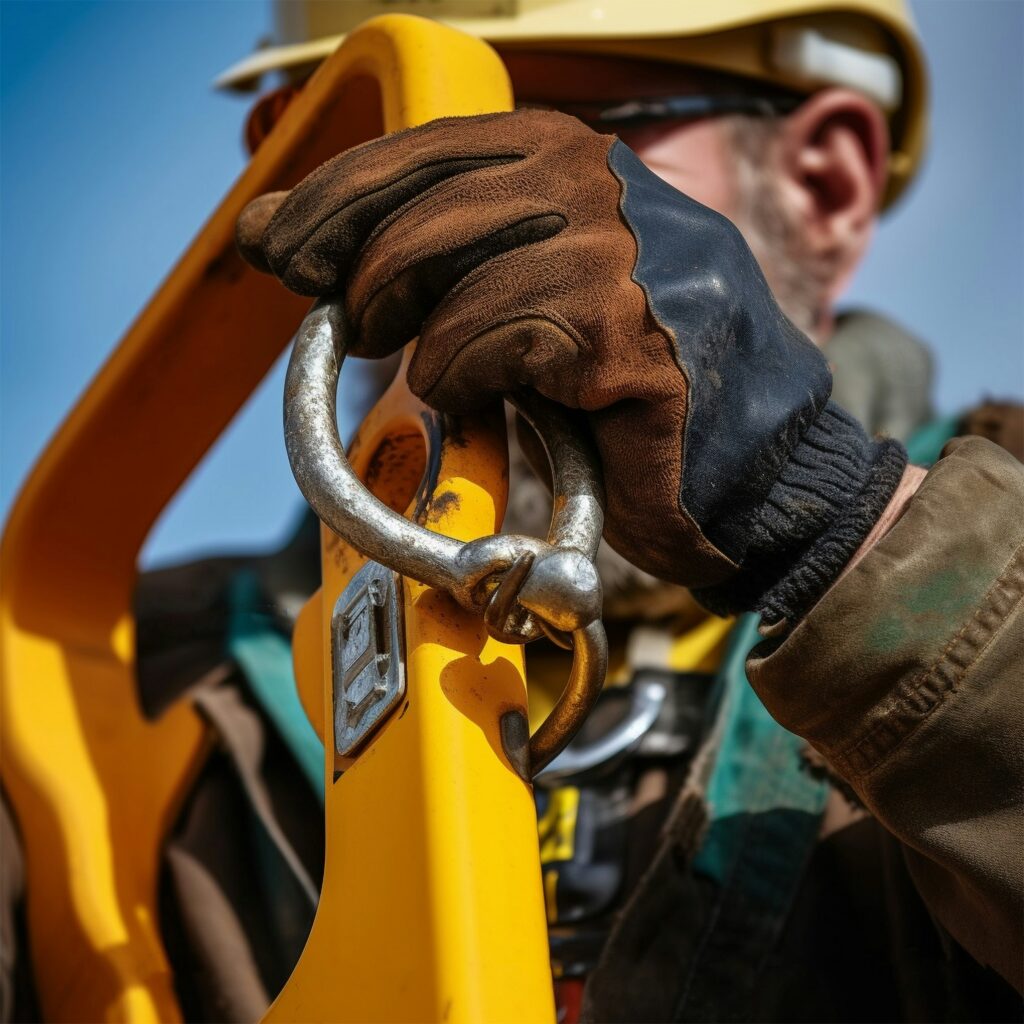
OSHA requires employers to train workers who are exposed to covered fall hazards so they can recognize those hazards and understand the procedures and equipment needed to work safely. Training must address the employee’s actual job duties, and employers must provide additional training when changing conditions or gaps in employee knowledge make it necessary.
Two important regulations establish these responsibilities: 29 CFR 1926.503 for construction and 29 CFR 1910.30 for general industry. Although both address fall hazard training, they differ in their specific requirements for instructors, documentation, and retraining.
For employers in Albuquerque and throughout New Mexico, understanding those differences is essential. A completed safety course or OSHA 10-Hour card does not automatically satisfy every fall protection training obligation.
What OSHA Standards Govern Fall Protection Training?

The first step is identifying which OSHA standard applies to the work employees perform.
Construction activities generally fall under OSHA’s construction standards in 29 CFR Part 1926. Many manufacturing, warehousing, maintenance, and other general-industry activities fall under 29 CFR Part 1910.
An employer should not assume that the same training requirements apply to every elevated work area.
Construction Fall Protection Training: 29 CFR 1926.503
Under 29 CFR 1926.503, employers must provide a training program for each employee who might be exposed to fall hazards covered by the construction fall protection standard.
The program must enable employees to recognize falling hazards and explain the procedures they must follow to minimize those hazards.
OSHA also requires the training to be conducted by a qualified person who is competent in the subjects covered by the regulation.
The training must address applicable fall protection systems, equipment use, inspection, maintenance, and employee responsibilities.
Construction employers must also maintain a written certification record documenting the required training.
General Industry Fall Protection Training: 29 CFR 1910.30
29 CFR 1910.30 establishes training requirements for employees who use personal fall protection systems and employees who use certain equipment covered by the walking-working surfaces standards.
For personal fall protection systems, affected employees must receive training before using the equipment.
Training must address fall hazards in the work area and the procedures employees must follow to minimize them.
It must also cover the correct procedures for installing, inspecting, operating, maintaining, and disassembling the personal fall protection systems employees use, along with proper hook-up, anchoring, tie-off techniques, and equipment storage.
The regulation requires training by a qualified person and requires employers to ensure that the information is presented in a manner employees understand.
Construction vs. General Industry: What Employers Need to Know
| Requirement | Construction: 1926.503 | General industry: 1910.30 |
| Workers covered | Employees who might be exposed to fall hazards covered by the construction standard | Employees covered by the specific training provisions, including those using personal fall protection systems |
| Instructor | Qualified person competent in the required subjects | Qualified person |
| Training content | Fall hazards, applicable systems, equipment, procedures, and employee responsibilities | Applicable fall hazards, equipment procedures, and specified equipment-related duties |
| Training documentation | Written certification record expressly required | No equivalent blanket certification-record provision in 1910.30 |
| Retraining | Required when specified changes or knowledge deficiencies make prior training inadequate | Required when specified changes or knowledge deficiencies make prior training inadequate |
| Training deadline | Required training must be provided for covered employees before exposure requiring that training | Training must occur before the covered equipment is used |
Other OSHA provisions may apply to scaffolds, ladders, aerial lifts, and specialized work. Employers should evaluate the actual activity rather than relying solely on a job title.
Which Employees Must Receive Fall Protection Training?
Employees need training when their work exposes them to hazards or equipment covered by an applicable OSHA training requirement.
This may include construction workers installing roofing, employees working near unprotected edges, maintenance personnel using personal fall arrest systems, or workers performing tasks on elevated platforms.
The training obligation is based on exposure and job responsibilities, not simply whether an employee works for a construction company.
For example, an office employee who never enters a hazardous work area may not need the same fall protection instruction as a roofing employee. A warehouse maintenance employee who occasionally uses a personal fall arrest system may require training even if working at heights is not part of the employee’s daily routine.
Does OSHA Require Fall Protection Training at Six Feet?
The six-foot rule is commonly associated with construction fall protection requirements, but it does not establish a universal training threshold.
Under OSHA’s construction rules, fall protection is generally required at unprotected sides and edges six feet or more above a lower level, subject to specific provisions and exceptions. Other activities have different thresholds, and certain hazards require protection regardless of a standard height trigger.
General industry also has different requirements depending on the working surface and activity.
Employers should identify the applicable hazard and standard before deciding which employees need training.
For a closer look at construction height requirements, read At What Height Is Construction Site Fall Protection Required?.
What Must OSHA Fall Protection Training Cover?
Effective training must go beyond telling employees to wear a harness.
Workers need to understand where fall hazards exist, which protective systems are appropriate, and how to use assigned equipment correctly.
Recognizing Fall Hazards
Employees should learn to identify hazards associated with their work, such as unprotected edges, floor openings, unstable walking surfaces, improperly protected elevated areas, and unsafe access conditions.
A worker may recognize an open roof edge as dangerous but overlook a floor opening concealed by materials.
Training should help employees identify hazards before beginning work and recognize when changing conditions require a new assessment.
Understanding Fall Protection Systems
Depending on the applicable standard and work performed, instruction may address guardrail systems, safety nets, personal fall arrest systems, positioning systems, or other permitted methods.
Employees must understand the systems they are expected to use.
A worker assigned to a personal fall arrest system needs different practical knowledge from someone whose work area is protected by a compliant guardrail.
For additional explanation of equipment and protective methods, see What Fall Protection Systems Are Covered in Training?.
Proper Equipment Use and Inspection
Workers using personal fall protection equipment need instruction on the equipment and procedures relevant to their duties.
Important subjects can include:
- Inspecting harnesses, connectors, lanyards, and other components before use.
- Understanding appropriate anchorage and tie-off procedures.
- Recognizing damaged, incompatible, or unsuitable equipment.
- Following manufacturer instructions and applicable worksite procedures.
- Understanding equipment limitations and the importance of adequate fall clearance.
- Knowing how to report defects and remove unsafe equipment from service.
For construction employees, 1926.503 expressly includes the correct procedures for erecting, maintaining, disassembling, and inspecting the fall protection systems used.
A worker who can put on a harness but cannot identify a suitable connection point may not have the knowledge needed to use the system safely.
Understanding Fall Clearance and Rescue Procedures
Personal fall arrest systems require sufficient clearance to stop a fall before the worker contacts a lower level or obstruction.
Training should address the clearance and equipment limitations relevant to the system being used.
A lanyard, self-retracting lifeline, and anchorage arrangement can produce different clearance requirements.
Employers can explore this issue further in How Do You Calculate Fall Clearance Distance Before Using a Fall Arrest System?.
Employees should also understand applicable emergency and rescue procedures. Under OSHA’s construction personal fall arrest provisions, employers must provide for prompt rescue or ensure employees can rescue themselves.
A fall protection program that addresses arresting a fall but ignores what happens afterward leaves a critical part of worker protection unresolved.
Who Is Qualified to Provide OSHA Fall Protection Training?
OSHA requires instructors to have the knowledge and qualifications necessary to teach the applicable subjects. However, the exact wording differs between the construction and general-industry standards.
Under 29 CFR 1926.503(a)(2), the employer must ensure that employees are trained, as necessary, by a competent person qualified in the required subject areas.
Under 29 CFR 1910.30(a)(2), employees must be trained by a qualified person.
These terms matter because OSHA distinguishes between people who possess specialized knowledge and those who are authorized to identify and correct workplace hazards.
A competent person, as defined in the construction standards, can identify existing and predictable hazards and has authority to take prompt corrective measures. A qualified person generally has recognized knowledge, training, experience, or other qualifications appropriate to the work.
An employee’s job title alone does not establish that the person is qualified to provide fall protection training.
Employers should evaluate an instructor’s understanding of the applicable standards, protective systems, equipment limitations, and worksite hazards.
For more information about supervisory safety responsibilities, see Who Needs Fall Protection Competent Person Training?.
How Must Employers Document Fall Protection Training?
Documentation is an important part of a fall protection program, but employers should distinguish between records OSHA expressly requires and additional records that are useful for managing training.
Construction Training Certification Requirements
Under 29 CFR 1926.503(b), construction employers must prepare a written certification record verifying that employees received the required training.
The record must contain:
- The employee’s name or another identifying designation.
- The date or dates of training.
- The signature of the person who conducted the training or the employer.
Employers must maintain the latest training certification.
When relying on qualifying training conducted by another employer, the regulation requires the certification record to reflect the date the current employer determined that the previous training was adequate.
A training certificate by itself should not be treated as proof that an employee understands every fall protection system used at a new jobsite.
General Industry Training Records
Section 1910.30 does not contain the same express written certification-record requirement found in construction standard 1926.503.
Nevertheless, maintaining records is a sensible management practice.
A general-industry employer may document the training date, employee name, instructor, subjects covered, equipment involved, and any evaluation of employee understanding.
These records can help supervisors identify training gaps and determine whether additional instruction is necessary.
Other applicable standards or contractual requirements may impose separate documentation duties.
What Should an Employer’s Training File Include?
A practical training file can include the required certification information, where applicable, along with supporting materials such as course outlines, equipment-specific instruction, employee acknowledgments, and evaluation results.
The important distinction is that a detailed training file is a recommended administrative practice, while the construction certification elements are expressly required by 1926.503.
When Does OSHA Require Fall Protection Retraining?
OSHA does not establish a universal annual fall protection retraining requirement under 1926.503 or 1910.30.
Instead, these standards require retraining when the employer has reason to believe an affected employee no longer has the understanding or skills necessary to work safely.
That distinction is important for employers who assume every employee must automatically repeat the same course once a year.
Changes in Workplace Conditions
Retraining may be required when workplace changes make previous instruction obsolete or inadequate.
Consider a construction employee who previously worked behind guardrails but is reassigned to an area requiring a personal fall arrest system.
The employee may understand basic fall hazards without knowing how to inspect, connect, or use the newly assigned equipment.
The employer must determine whether the existing training is adequate for the new responsibilities.
Changes in Fall Protection Equipment
Introducing a different fall protection system can create new training needs.
For example, employees accustomed to one type of lanyard may need additional instruction before using a different system with distinct operating limitations.
Employers should not assume that experience with one device establishes competence with every device.
Evidence That Employees Do Not Understand the Training
Retraining is also necessary when an employee demonstrates inadequate knowledge or skill.
Examples may include repeatedly connecting equipment incorrectly, failing to recognize a fall hazard, or misunderstanding how a protective system operates.
The employer should address the identified deficiency rather than relying on the employee’s previous course completion date.
Common Retraining Triggers
| Situation | Appropriate employer response |
| Employee changes to a different fall protection system | Determine whether previous training covers the new equipment; retrain if inadequate |
| Worksite conditions introduce unfamiliar hazards | Reassess the hazards and provide necessary instruction |
| Employee demonstrates incorrect equipment use | Correct the unsafe condition and retrain as required |
| New equipment has different operating procedures | Provide instruction addressing the changed procedures |
| Employee completes one year since training | Evaluate applicable requirements and actual needs; annual retraining is not automatically mandated by these two standards |
Employers may establish periodic refresher schedules as part of their safety programs. Those schedules should not be confused with a universal annual OSHA mandate.
Does OSHA 10-Hour or OSHA 30-Hour Training Satisfy Fall Protection Requirements?
No. Completing OSHA 10-Hour or OSHA 30-Hour Outreach Training does not, by itself, satisfy an employer’s training obligations under specific OSHA standards.
OSHA’s Outreach Training Program provides general workplace safety and hazard-awareness education.
The 10-hour course primarily introduces workers to common hazards. The 30-hour course provides more extensive instruction and is often appropriate for supervisors or employees with safety responsibilities.
Neither course replaces the training an employer must provide for the actual hazards, equipment, and procedures employees encounter.
OSHA explains this distinction in its Outreach Training Program guidance.

Occupational Safety and Health Administration
An employee may hold an OSHA 30-Hour course completion card and still require instruction on the specific personal fall arrest system assigned at a workplace.
Similarly, an experienced construction worker may need additional training when moving to a different fall protection system.
The appropriate question is not simply whether the employee has a card. It is whether the employee has received and understood the training required for the work.
How Can Employers Build an Effective Fall Protection Training Program?
A useful training program begins with the work employees perform, not with a generic course description.
Consider a New Mexico construction contractor whose employees work on commercial roofs, elevated platforms, and scaffolding. Each activity may involve different hazards, protective systems, and OSHA provisions.
The employer should evaluate those differences before deciding what training employees need.
Five Steps for Employers
1. Identify the applicable OSHA standards. Determine whether the work falls under construction, general industry, or another applicable regulatory provision. Identify additional requirements for specialized equipment or activities.
2. Evaluate employee exposure. Determine which employees may encounter fall hazards, what tasks they perform, and which protective systems they will use.
3. Provide training appropriate to the work. Use an instructor who meets the applicable qualification requirements. Address the hazards, equipment, procedures, and employee responsibilities identified in the relevant standard.
4. Verify understanding and document training. Ensure employees can apply what they have learned. Maintain the written certification required for construction training and other applicable records.
5. Reassess training when conditions change. Review employee knowledge when new equipment, different tasks, changed workplace conditions, or observed deficiencies create additional training needs.
These steps provide a practical framework, but employers remain responsible for meeting the specific requirements that apply to their operations.
Why Hands-On Instruction Matters
Fall protection training is most useful when employees can connect the information to equipment and conditions they recognize.
A worker may understand the purpose of a harness after a classroom presentation but still need practical instruction to recognize damaged webbing, identify an appropriate anchorage, or understand the limitations of a fall arrest system.
Practical demonstrations and assessments can help employers determine whether employees have the knowledge and skills necessary for their assignments.
For employers considering remote instruction, Can Fall Protection Training Be Done Online? explores the differences between online education and training that addresses practical workplace responsibilities.
What Should New Mexico Employers Know About OSHA Fall Protection Training?
New Mexico operates an OSHA-approved state occupational safety and health program administered through the New Mexico Environment Department’s Occupational Health and Safety Bureau.
The state program generally covers private-sector employers and state and local government workplaces within its jurisdiction. Certain workplaces remain under federal OSHA authority.
Employers should determine which agency and requirements apply to their operations, particularly when working on federal installations or performing specialized activities.
The New Mexico Occupational Health and Safety Bureau provides information about the state’s occupational safety and health program.
Construction employers in Albuquerque, Santa Fe, Rio Rancho, and other New Mexico communities may encounter fall hazards associated with roofing, structural construction, elevated maintenance, scaffolding, and industrial facilities.
The location of the jobsite does not eliminate the employer’s responsibility to identify hazards and provide applicable training.
Contractors should also review project-specific safety requirements. A project owner or general contractor may require additional training or documentation beyond the minimum provisions of a particular OSHA standard.
Frequently Asked Questions About OSHA Fall Protection Training
Does OSHA Require Fall Protection Training Every Year?
No. OSHA’s construction and general-industry fall protection training provisions do not establish a universal annual refresher requirement. Retraining is required when changed conditions, different equipment, or deficiencies in employee knowledge or skills make previous training inadequate. Other applicable rules or employer requirements may establish additional obligations.
Can Employees Complete Fall Protection Training Online?
Online instruction can be useful for teaching regulations, hazard recognition, and safety principles. However, employers must ensure the training satisfies the applicable OSHA requirements and that employees have the understanding and skills needed for their duties. Where practical equipment use is involved, online instruction alone may not adequately demonstrate an employee’s ability to use the equipment safely.
Does Previous Fall Protection Training Transfer to a New Employer?
Previous training may be relevant, but the new employer must determine whether it is adequate for the employee’s current work. Under construction standard 1926.503, an employer relying on qualifying training from another employer must document when it determined the previous training was adequate. Different hazards or equipment may require additional instruction.
Does OSHA Require a Specific Number of Hours for Fall Protection Training?
Sections 1926.503 and 1910.30 do not establish one universal minimum number of training hours. The instruction must cover the applicable subjects and provide employees with the required knowledge and skills. Course duration may vary according to the work, equipment, employee experience, and other applicable requirements.
Is a Fall Protection Training Certificate Enough to Prove OSHA Compliance?
No. A certificate can help document completed instruction, but it does not establish that all applicable employer responsibilities have been met. Employers must ensure training is adequate for the employee’s work, that required records are maintained, and that retraining occurs when necessary.
OSHA Fall Protection Training for Albuquerque and New Mexico Employers
Meeting OSHA’s fall protection training requirements involves more than scheduling a class or collecting completion certificates. Employers must identify the hazards employees face, provide instruction appropriate to their duties, maintain required documentation, and address training deficiencies when they arise.
Safety Counselling has served New Mexico employers since 1973, providing workplace safety education, OSHA training, fall protection instruction, and safety consulting services.
Its Albuquerque-based training programs help employers and employees develop practical knowledge of workplace hazards and safer work practices.
Whether your organization needs fall protection training for construction workers, supervisors, or employees working with personal fall protection equipment, choosing instruction that reflects actual workplace conditions is an important part of a sound safety program.
Contact Safety Counselling at 505-881-1112 or visit safetycounselling.com to discuss your organization’s fall protection training needs.
Regulatory references: OSHA 29 CFR 1926.503 and 29 CFR 1910.30. These primary standards support the training, documentation, and retraining requirements discussed above.