
What Is the Difference Between Fall Restraint and Fall Arrest?
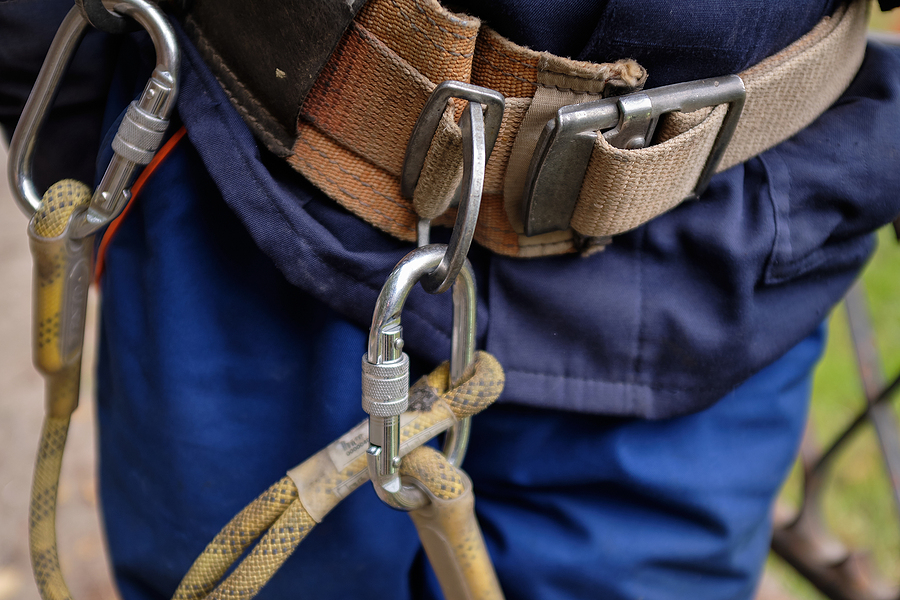 The simplest difference is this: a fall restraint system is set up to prevent a worker from reaching a place where a fall can occur, while a personal fall arrest system allows a fall to occur but is designed to stop the worker before striking a lower level or obstruction. Both are forms of fall protection, but they solve the hazard in very different ways.
That distinction matters on roofs, elevated platforms, aerial lifts and other work areas where employees may be exposed to an edge or lower level. Choosing between restraint and arrest is not just a matter of using a harness and lanyard. The employer has to evaluate the work, the fall hazard, anchorage, equipment, movement needed to perform the task and—when fall arrest is used—the available clearance and rescue plan.
Fall Restraint Prevents the Fall
Fall restraint is a prevention strategy. The system is arranged so the worker cannot physically reach the fall hazard. OSHA defines a fall restraint system in certain standards as a system that prevents the user from falling any distance. In practical terms, the worker is tethered to an anchorage with a properly configured connection that limits travel before the worker can reach an unprotected edge.
A restraint system may include a body harness or, where permitted for restraint, a body belt, along with an anchorage, connectors, lanyard or lifeline. The critical point is not the appearance of the equipment. It is the way the system is rigged. If the worker can still reach the edge and go over it, the setup is not functioning as fall restraint.
OSHA specifically explains in its residential-construction guidance that an effective restraint system must be rigged so the worker cannot reach the fall hazard. OSHA's residential fall-protection guidance gives the example of a worker connected to a roof anchorage with a lanyard short enough to keep the worker from physically reaching the roof edge.
Fall Arrest Stops a Fall After It Starts
A personal fall arrest system, or PFAS, works differently. It does not necessarily keep the worker away from the edge. Instead, it is designed to arrest the worker after a fall begins. OSHA describes a PFAS as a system consisting of a body harness, anchorage and connector; the connection may include a lanyard, deceleration device, lifeline or a suitable combination of components.
Because the worker may actually fall, fall arrest introduces issues that restraint is designed to avoid: free-fall distance, deceleration distance, total fall clearance, arresting forces, swing-fall exposure and the need for prompt rescue. A full-body harness is required for personal fall arrest; body belts cannot be used for fall arrest.
For general-industry requirements and performance criteria, see OSHA 29 CFR 1910.140. Construction employers should also evaluate the applicable requirements in 29 CFR 1926 Subpart M and any task-specific standard.
Fall Restraint vs. Fall Arrest at a Glance
| Question | Fall Restraint | Fall Arrest |
| Primary purpose | Prevent the worker from reaching the fall hazard. | Stop the worker after a fall begins. |
| Can the worker go over the edge when properly rigged? | No. The system must prevent access to the fall hazard. | Potentially yes. The system is designed to arrest the fall. |
| Fall clearance calculation | Normally not used in the same way because no fall should occur. | Critical. The system needs enough unobstructed distance to arrest the fall safely. |
| Deceleration / energy absorption | Not intended to arrest a fall. | May use energy-absorbing or self-retracting components to control arrest forces. |
| Rescue planning | Still part of broader emergency planning, but the system is intended to prevent suspension after a fall. | Essential. OSHA requires employers to provide for prompt rescue when personal fall protection is used. |
| Body belt | May be permitted for restraint in some applications, subject to the applicable standard and system instructions. | Not permitted as part of a personal fall arrest system. |
Why Fall Restraint Is Often the Better Control When It Fits the Work
If the job can be completed while keeping the employee away from the edge, restraint can eliminate the actual fall event. That removes several hazards that must be managed with fall arrest: the worker does not build free-fall distance, the system does not have to stop a falling body, and the worker should not be left suspended in a harness after an arrested fall.
That does not make restraint automatically appropriate for every elevated task. The system still has to allow the employee to reach the work area without reaching the hazard. Anchor location, tether length, compatible connectors, work path and equipment instructions all matter. A tether that is too long can turn what was intended as restraint into a fall-arrest exposure without the system necessarily being configured for arrest.
When Fall Arrest May Be Necessary
Fall arrest becomes relevant when the employee must work in a location where restraint cannot keep the person completely away from the fall exposure and the applicable standard permits or requires a personal fall arrest system. Examples can include work near certain unprotected edges, structural work, elevated construction activities and other situations where the employee needs enough movement to enter the fall-hazard area.
Once the system is being used to arrest a fall, the planning changes. Employers must evaluate the entire fall path—not simply whether the worker is wearing a harness. The selected system has to meet applicable performance requirements and be used within the manufacturer's instructions.
Fall Clearance Is One of the Biggest Differences
Fall restraint is designed so there is no fall to arrest. Fall arrest must account for what happens after the worker leaves the working surface. The required clearance can include free-fall distance, deceleration distance, harness and D-ring movement, the worker's body below the D-ring, system elongation and an appropriate safety margin based on the system and manufacturer's instructions.
This is why a six-foot lanyard does not mean that six feet of open space below the worker is enough. The total stopping distance can be substantially greater. Anchorage location also changes the result: tying off below the dorsal D-ring can increase free-fall distance.
Before using fall arrest, the actual system must be checked against the available unobstructed clearance below the worker. Equipment-specific instructions and worksite conditions should control the calculation rather than a generic number copied from a chart.
Do Not Confuse Fall Restraint With Work Positioning
Fall restraint, fall arrest and work positioning are related terms, but they are not interchangeable. A work-positioning system supports an employee on an elevated vertical surface so the employee can work with both hands free while leaning. A restraint system prevents the worker from reaching a fall hazard. A fall arrest system catches a worker after a fall begins.
The same general categories of equipment—harnesses, connectors and anchorages—may appear in more than one system, which is one reason workers can confuse them. What determines the system is how the components are selected, rated, connected and rigged for the specific task.
A Simple Jobsite Example
Consider two workers performing different tasks on an elevated roof. Worker A only needs to service equipment located well inside the roof perimeter. If an appropriate restraint system can be anchored and adjusted so that Worker A cannot reach any unprotected edge, the system prevents the fall exposure.
Worker B must perform work close enough to the edge that the required working position cannot be reached while remaining fully restrained. If a personal fall arrest system is the appropriate protection for that task, the employer now has to evaluate the anchorage, connector, harness, free-fall distance, total clearance, potential swing fall, lower-level obstructions and rescue.
The important decision is not simply, “Do both workers have harnesses?” It is, “What hazard-control function is each system expected to perform, and is it actually configured to perform that function?”
How Should an Employer Choose Between Restraint and Arrest?
Before work starts, evaluate the job rather than choosing equipment by habit. A useful planning sequence is:
- Identify every edge, opening, lower level and other fall exposure in the employee's work area.
- Determine whether the task can be performed without the employee entering the fall-hazard area.
- Consider guardrails or other prevention methods where they are appropriate before relying on personal systems.
- If personal restraint is selected, verify that the complete travel path prevents the worker from reaching the hazard.
- If fall arrest is selected, verify compatible equipment, acceptable anchorage, free-fall limits, total clearance, swing-fall exposure and rescue arrangements.
- Follow the applicable OSHA standard and the manufacturer's instructions for the actual equipment being used.
- Provide training that addresses the equipment and hazards employees will encounter at the real worksite.
What Training Should Workers Receive?
Workers need to understand more than how to buckle a harness. They should be able to recognize the fall hazard, understand whether the system is intended to restrain or arrest, inspect the equipment, connect to approved anchorage as instructed, understand the limits of the system and know what to do if conditions change.
Safety Counselling provides workplace safety education for New Mexico employers, including fall protection training in Albuquerque. Its company materials identify hands-on fall-protection instruction and equipment demonstrations as part of its broader practical safety-training approach. Employers may also need broader construction hazard training for workers or supervisors through OSHA 10-Hour Construction training or OSHA 30-Hour Construction training, depending on the employee's role and training needs.
Frequently Asked Questions
Is fall restraint safer than fall arrest?
When a restraint system can be properly used to keep a worker from reaching the fall hazard, it prevents the fall event itself. That can eliminate fall-arrest forces, clearance problems and post-fall suspension. The correct protection still depends on the task, applicable standard, worksite and equipment.
Can the same harness be used for fall restraint and fall arrest?
Some full-body harnesses may be designed for more than one application, but the complete system must be compatible with the intended use and the manufacturer's instructions. Do not assume that because a harness can be worn in both situations, every lanyard, connector or anchorage can be used the same way.
Does fall restraint require a fall-clearance calculation?
A properly configured restraint system prevents the worker from falling over the edge, so it does not use fall clearance in the same way as a fall-arrest system. The employer still has to verify that the restraint setup actually prevents access to the hazard throughout the worker's permitted travel area.
Can a self-retracting lifeline be used as fall restraint?
Not automatically. OSHA has noted that a self-retracting lanyard is not appropriate for restraint if its full extension would allow the worker to reach the fall hazard. Equipment must be selected and configured for the intended function.
What happens after a personal fall arrest system stops a fall?
The worker may be suspended and unable to self-rescue. OSHA requires employers to provide for prompt rescue of employees in the event of a fall, or assure that employees can rescue themselves. Rescue planning therefore belongs in the fall-arrest plan before work begins.
Build the System Around the Hazard, Not Just the Equipment
The practical difference between fall restraint and fall arrest is straightforward: restraint keeps the worker from falling; arrest stops the worker after a fall starts. The harder—and more important—part is making sure the selected system truly performs the intended function at the specific work location.
Employers should evaluate the task, fall exposure, anchorage, equipment compatibility, worker movement and applicable OSHA requirements before elevated work begins. When fall arrest is necessary, clearance, swing-fall hazards and rescue must be part of that planning.
For practical fall-protection instruction for employees and supervisors, contact Safety Counselling at (505) 881-1112 or visit the Albuquerque training center at 2900 Wellesley Dr. NE, Albuquerque, NM 87107 to ask about current fall-protection training options.
External Resources
- OSHA — 29 CFR 1910.140, Personal Fall Protection Systems — Defines personal fall arrest systems and establishes general-industry requirements for personal fall protection, including system performance and prompt rescue.
- OSHA — Fall Protection in Residential Construction — Explains that an effective fall restraint system is rigged to prevent a worker from reaching the fall hazard and provides a practical roof-restraint example.
- OSHA — 29 CFR 1926.1401, Definitions — Provides an OSHA definition of a fall restraint system as a system that prevents the user from falling any distance.