
What Is Included in Forklift Certification Training?
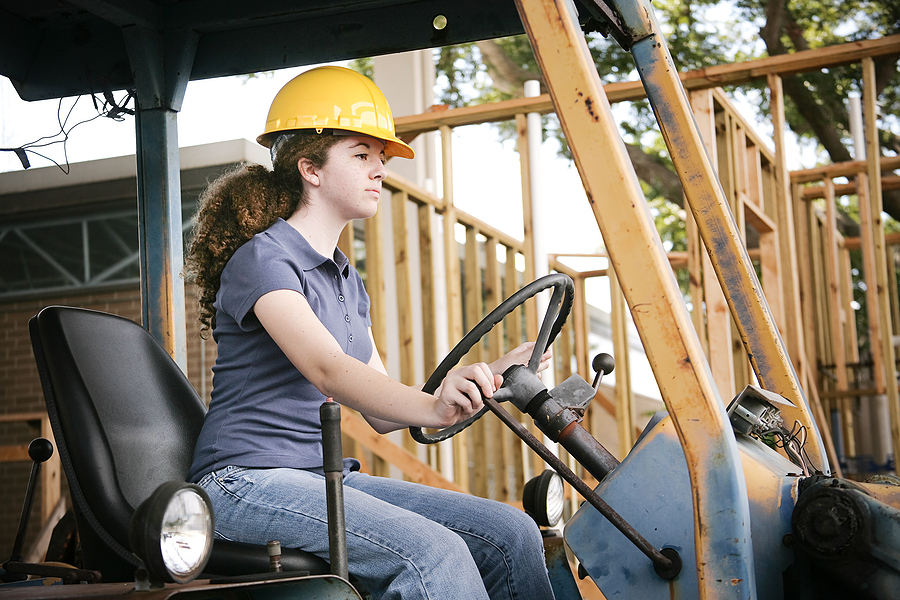
Forklift certification training includes three major parts: formal instruction, hands-on practical training, and an evaluation of the operator’s performance. OSHA also requires forklift training to address applicable truck-specific and workplace-specific hazards, and the employer must document that the operator has been trained and evaluated. (OSHA)
That means forklift certification involves considerably more than watching a safety video, passing a written test, or receiving a wallet card.
A complete operator-training process should answer four practical questions:
Does the operator understand the forklift?
Does the operator understand the hazards around it?
Can the operator physically operate the equipment safely?
Has the operator demonstrated that ability during an evaluation?
For workers and employers, the important question is not simply whether a course produces a certificate. The training should prepare the operator to understand the equipment, recognize workplace hazards, practice safe operation, and demonstrate competence.
What Are the Main Parts of Forklift Certification Training?
OSHA requires powered industrial truck operator training to combine three types of training activity:
| Training Component | What It Covers |
| Formal instruction | Operating principles, hazards, controls, stability and safe practices |
| Practical training | Demonstrations and supervised hands-on exercises |
| Operator evaluation | Observation of the employee’s ability to operate safely in the workplace |
OSHA also requires initial training to address applicable truck-related and workplace-related subjects. (OSHA)
So the process can be thought of as:
Learn the principles → practice the skills → demonstrate competence.
Each part serves a different purpose.
What Is Covered During Formal Forklift Instruction?
Formal instruction provides the knowledge an operator needs before or alongside hands-on practice.
OSHA permits this portion of training to be delivered through methods such as lectures, discussions, interactive computer learning, videos, and written material. (OSHA)
The purpose is not simply to memorize OSHA terminology. Operators need to understand how the equipment behaves, what can make it unstable, how its controls work, and what conditions can turn routine material handling into a safety problem.
OSHA’s sample powered industrial truck training outline includes subjects such as forklift types and features, basic principles of stability, operating procedures, inspections, driving, load handling, fueling or charging where applicable, workplace conditions, hands-on operation, and demonstration of proficiency. (OSHA)
What Forklift-Specific Topics Are Covered?
OSHA identifies a detailed group of truck-related topics that must be addressed when they are applicable to safe operation.
Controls and Instrumentation
Operators need to understand the controls on the powered industrial truck they will use.
That includes knowing what each control does, how it operates, and how the truck responds.
This matters because powered industrial trucks are not simply automobiles with forks attached. Steering characteristics, load placement, stability, braking, and visibility can differ significantly from passenger vehicles.
OSHA specifically includes truck controls and instrumentation among required training topics. (OSHA)
Steering and Maneuvering
Forklift operators need to learn how the truck turns and maneuvers.
Depending on the equipment, this may include understanding rear-end swing, turning radius, clearance requirements, and how the truck behaves in narrow aisles.
For an Albuquerque warehouse employee, this could mean maneuvering between storage racks while pedestrians are working nearby. For a construction employee, the concern may be controlling equipment around changing work areas and uneven surfaces.
Visibility
Visibility is another OSHA training topic.
An operator may have a clear view while traveling unloaded but experience a significantly restricted view once a large pallet or other load is placed on the forks.
Training should address how visibility affects travel, positioning, interaction with pedestrians, and safe load handling. (OSHA)
Fork and Attachment Operation
Operators should understand the forks and any applicable attachments on the equipment they are authorized to operate.
Attachments can affect the way a truck handles and may affect capacity or stability. OSHA specifically addresses fork and attachment adaptation, operation, and limitations within operator training requirements. (OSHA)
Training should therefore reflect the actual equipment being used rather than assuming that every powered industrial truck operates exactly the same way.
Vehicle Capacity
A forklift has a rated capacity.
Operators need to understand that capacity and recognize that loads outside the truck’s safe operating limits can create serious stability problems.
OSHA includes vehicle capacity as a required truck-related training topic. (OSHA)
The point is not just to memorize a number on a data plate. Operators should understand that the characteristics of the load, load position, attachments, and other conditions can affect safe operation.
Vehicle Stability
Forklift stability is one of the most important subjects in operator training.
Operators need to understand how factors such as:
- Load weight
- Load position
- Turning
- Speed
- Slopes
- Uneven surfaces
- Raised loads
- Attachments
can affect the truck’s stability.
OSHA specifically requires instruction on vehicle stability. Its sample training outline also includes the basic physics of powered industrial trucks. (OSHA)
This is essential because tip-over prevention depends on understanding how the equipment responds to the load and operating environment.
Does Forklift Certification Include Pre-Operation Inspections?
Yes, equipment inspection is an important part of forklift operator preparation.
OSHA’s sample powered industrial truck training outline includes pre-operational inspection and explains the importance of the pre-operation checkout. (OSHA)
A training program may address how to identify obvious equipment problems before operation and when the operator should report a problem rather than continue using the truck.
Depending on the equipment, items may include condition of:
- Forks
- Tires
- Controls
- Steering
- Brakes
- Warning devices
- Hydraulic components
- Mast or lifting mechanisms
- Fluid levels or leaks where applicable
- Other safety-related components
The specific inspection process should reflect the equipment and the employer’s procedures.
Is Refueling or Battery Charging Covered?
It may be, depending on the truck involved.
OSHA identifies refueling and battery charging or recharging among the truck-related topics that must be addressed when applicable. (OSHA)
The content may differ depending on whether the workplace uses:
- Electric forklifts
- LPG-powered trucks
- Gasoline-powered trucks
- Diesel-powered trucks
- Other applicable powered industrial trucks
A worker who operates only electric equipment may need different applicable instruction from someone working with LPG-powered equipment.
This is one reason OSHA does not treat forklift training as a completely identical class for every employee and workplace.
What Workplace Hazards Are Covered in Forklift Training?
Training must also address the environment in which the employee will operate the truck.
This is critical.
A person can understand the controls perfectly and still be unprepared for the hazards created by the actual workplace.
OSHA identifies workplace-related training topics that include surface conditions, load stability, pedestrian traffic, narrow aisles, hazardous locations, ramps, slopes, closed environments, and other conditions unique to the workplace. (OSHA)
Pedestrian Traffic
Forklifts frequently operate in areas shared with employees, contractors, customers, or visitors.
Training should address safe interaction with pedestrians and the need to maintain awareness of people moving through the work area.
For a New Mexico warehouse or manufacturing facility, that could mean forklift traffic crossing production areas, loading zones, pedestrian walkways, or shipping departments.
Narrow Aisles and Restricted Areas
Operators may need to maneuver in tight storage areas.
Training should address the hazards created by limited clearance and restricted visibility.
The techniques and risks can differ significantly from operating in an open yard.
Ramps and Slopes
Ramps and sloped surfaces can change the way the forklift and its load behave.
OSHA specifically includes ramps and other sloped surfaces among the workplace-related subjects requiring training when applicable. (OSHA)
Surface Conditions
Uneven, slippery, damaged, or changing surfaces can affect stability and control.
This may be especially important in construction, industrial yards, loading areas, or outdoor operations where surfaces are not as predictable as a finished warehouse floor.
Load Composition and Stability
Training should address the loads employees actually handle in real forklift workplace operations.
A secured pallet of uniform products can behave differently from an unusually shaped, unstable, or shifting load.
OSHA includes load composition and load stability among workplace topics. (OSHA)
Hazardous or Restricted Locations
Certain workplaces contain additional hazards related to flammable materials, dust, ventilation, or restricted operating conditions.
The equipment and training need to reflect the environment where the truck will actually be used. OSHA’s powered industrial truck standard addresses both truck classifications and hazardous locations. (OSHA)
Does Forklift Training Include Hands-On Driving?
Yes.
OSHA requires practical training, and that training must include demonstrations performed by the trainer and practical exercises performed by the trainee. (OSHA)
This is where the employee moves from understanding the concepts to actually operating the equipment.
Practical training may include activities such as:
- Starting and stopping
- Steering and maneuvering
- Positioning forks
- Picking up loads
- Carrying loads
- Stacking and unstacking
- Traveling loaded and unloaded
- Parking the truck
- Working around pedestrians
- Operating near ramps or confined areas
- Conducting pre-operation checks
The exact exercises should reflect the truck and workplace.
Why Is Hands-On Training Necessary?
A written test can tell an instructor whether a worker understands a safety rule.
It cannot tell the instructor whether the worker can actually apply it.
Consider someone who correctly answers a question about forklift stability.
That person still has to demonstrate that they can:
- Turn without creating unnecessary instability
- Position a load properly
- Maintain safe visibility
- Control speed
- Maneuver around obstacles
- Recognize when conditions are unsafe
That is why OSHA requires both knowledge-based instruction and practical exercises. (OSHA)
This is why a generic online course that never addresses the workplace, provides no hands-on practice, and includes no operator evaluation should not be treated as the complete OSHA-required training process.
What Happens During the Forklift Operator Evaluation?
After training and practice, the employee must demonstrate that they can safely operate the powered industrial truck.
OSHA requires an evaluation of the operator’s performance in the workplace. Its training-program guidance explains that the evaluation should determine both whether the training has been adequate and whether the employee can safely perform truck operations in the workplace. (OSHA)
The evaluator may observe the operator performing relevant tasks such as:
- Pre-operation inspection
- Starting and stopping
- Maneuvering
- Load pickup
- Load placement
- Traveling with a load
- Working around pedestrians
- Parking
- Following workplace procedures
This is sometimes thought of as a “forklift driving test,” but the purpose is broader than simply driving from one point to another.
The evaluator is determining whether the employee can perform the job safely.
Who Can Conduct the Forklift Training and Evaluation?
OSHA requires training and evaluation to be conducted by people who have the knowledge, training, and experience necessary to train powered industrial truck operators and evaluate their competence. (OSHA)
That may be someone within the employer’s organization or an outside training provider.
Does Forklift Certification Include a Written Test?
Many training programs use written or knowledge-based testing as part of formal instruction, but OSHA’s core requirement is broader than passing a written exam.
OSHA requires:
formal instruction
practical training
operator performance evaluation. (OSHA)
So even if a worker gets every written question correct, that alone does not demonstrate safe operating competence.
Can Forklift Certification Training Be Completed Entirely Online?
No—not as the complete OSHA-required operator training process.
Online learning may be used for part of the formal instruction because OSHA allows interactive computer learning as one instructional method. But the standard also requires practical training and workplace performance evaluation. (OSHA)
An online program therefore may teach:
rules, concepts and hazards
but it cannot by itself demonstrate:
hands-on operating skill and workplace competence.
For an employer, this distinction is especially important when evaluating low-cost online programs that advertise forklift “certification” after only a brief course and quiz.
Does Every Forklift Certification Class Cover Exactly the Same Things?
No.
OSHA identifies truck-related and workplace-related subjects that must be addressed when applicable. The necessary training depends on the trucks the operator will use and the working conditions the employee will encounter. (OSHA)
For example, an Albuquerque distribution center may emphasize:
- Loading docks
- Racking systems
- Pedestrians
- Narrow aisles
- Indoor electric equipment
A construction operation may need to emphasize:
- Rough surfaces
- Changing jobsite conditions
- Outdoor equipment
- Slopes
- Different load types
A manufacturing facility may need additional focus on:
- Production traffic
- Restricted routes
- Specialized loads
- Interaction with fixed machinery
The appropriate training should reflect employee responsibilities, actual hazards, equipment used, applicable standards, prior training, experience level, employer procedures, worksite conditions, and required hands-on evaluation.
Does OSHA 10 or OSHA 30 Include Forklift Certification?
No.
OSHA 10-Hour and OSHA 30-Hour Outreach courses provide broad safety and health awareness. They do not replace training required under a specific OSHA standard, such as powered industrial truck operator training.
So an employee could have an OSHA 10 or OSHA 30 course completion card and still need forklift operator training before operating a powered industrial truck.
What Documentation Is Required After Forklift Training?
OSHA requires the employer to certify that the operator has been trained and evaluated.
The certification must include:
- The operator’s name
- The date of training
- The date of evaluation
- The identity of the person or people performing the training or evaluation. (OSHA)
That documentation is important, but it should not be confused with operator competence itself.
A card or certificate can help a person document completed training.
The actual OSHA requirement remains that the operator has been properly trained, evaluated, and found competent to operate the truck safely.
When Is Forklift Refresher Training Required?
OSHA requires refresher training in relevant topics when:
- An operator has been observed operating unsafely
- An operator has been involved in an accident or near-miss
- An evaluation reveals unsafe operation
- The employee is assigned to a different type of powered industrial truck
- Workplace conditions change in a way that could affect safe operation. (OSHA)
OSHA also requires each operator’s performance to be evaluated at least once every three years. (OSHA)
That does not mean every operator automatically repeats the entire original course every three years.
The distinction is:
Three years → performance reevaluation
Specified safety or workplace changes → refresher training when required
What Should Employers Look for in Forklift Certification Training?
Employers comparing training options should look beyond the words “forklift certificate.”
Ask whether the training actually addresses:
Formal instruction
Truck-specific information
Workplace hazards
Hands-on operation
Performance evaluation
Appropriate documentation
It is also worth asking how the provider accounts for:
- Different forklift types
- New vs. experienced operators
- Workplace-specific hazards
- Group training
- Employer-site training
- Refresher needs
- Practical evaluation
Individuals may prefer a scheduled public class, while employers with multiple operators may benefit from private, group, on-site, equipment-focused, or workplace-hazard-focused training when those options are available.
Frequently Asked Questions About Forklift Certification Training
What Is Included in Forklift Certification Training?
Forklift operator training includes formal instruction, practical hands-on training, and evaluation of the employee’s performance. It must also address applicable truck-specific and workplace-specific hazards. (OSHA)
What Do You Learn During Forklift Certification?
Operators may learn about controls, steering, visibility, vehicle capacity, stability, attachments, inspections, fuel or battery procedures, load handling, pedestrian safety, ramps, surface conditions, workplace hazards, and other subjects applicable to their equipment and jobsite. (OSHA)
Does Forklift Certification Require Hands-On Training?
Yes. OSHA requires practical training that includes demonstrations by the trainer and practical exercises performed by the trainee. (OSHA)
Is There a Forklift Driving Test?
OSHA requires an evaluation of operator performance in the workplace. This commonly involves observing the employee operating the truck and performing relevant work tasks to determine whether the worker can operate safely. (OSHA)
Does Forklift Training Cover Pre-Operation Inspections?
Yes. OSHA’s sample operator-training outline specifically includes pre-operational inspection and the importance of the pre-operation checkout. (OSHA)
Does Forklift Training Cover Stability and Tip-Over Prevention?
Yes. Vehicle stability is one of OSHA’s truck-related training topics, and OSHA’s sample outline includes the physics of powered industrial trucks. (OSHA)
Does Forklift Training Cover Pedestrians?
Yes, when pedestrian traffic is present in the workplace. OSHA specifically lists pedestrian traffic as a workplace-related training topic. (OSHA)
Can Forklift Training Be Completed Entirely Online?
No. Online instruction can be used as part of formal training, but OSHA also requires hands-on practical training and an evaluation of the operator’s performance. (OSHA)
Does Every Forklift Operator Receive Identical Training?
Not necessarily. Training must reflect the type of truck the employee operates and the actual workplace conditions encountered. Some listed topics may not be applicable to every workplace. (OSHA)
When Is Forklift Refresher Training Required?
Refresher training is required when an operator is observed operating unsafely, is involved in an accident or near-miss, performs unsafely during an evaluation, is assigned a different type of truck, or encounters workplace changes that affect safe operation. (OSHA)
Where Can I Take Forklift Certification Training in Albuquerque?
Safety Counselling provides forklift training and certification as part of its Albuquerque workplace safety programs. The company offers public classes and may also arrange private, group, customized, or employer-site instruction depending on the training need and current availability.
External Source and Further Reading
The OSHA requirements discussed in this article come from the federal powered industrial truck standard and OSHA’s official operator-training guidance. These sources explain the required combination of formal instruction, practical training, operator evaluation, employer documentation, applicable truck- and workplace-specific topics, and refresher-training requirements. Employers should use OSHA’s current materials when making compliance decisions because requirements and agency guidance should be verified against the official source rather than relying only on a training provider’s summary.
External reference: U.S. Occupational Safety and Health Administration (OSHA) — Powered Industrial Trucks and operator-training requirements.
Need Forklift Certification Training in Albuquerque?
Forklift certification training should prepare employees to do more than answer safety questions.
Operators need to understand their equipment, recognize the hazards around them, practice safe operating techniques, and demonstrate that they can safely perform the job.
Safety Counselling is an Albuquerque-based workplace safety training and consulting company that has served New Mexico businesses since 1973. Its programs include forklift training and certification along with OSHA training, CPR/First Aid/AED, fall protection, confined space, defensive driving, and other occupational safety programs.
Effective forklift training is best treated as practical safety preparation rather than a one-time paperwork exercise.
If you need forklift operator training for yourself or your employees, call Safety Counselling at 505-881-1112 to ask about upcoming forklift certification classes or employer training options in Albuquerque and throughout New Mexico.