
At What Height Is Construction Site Fall Protection Required?
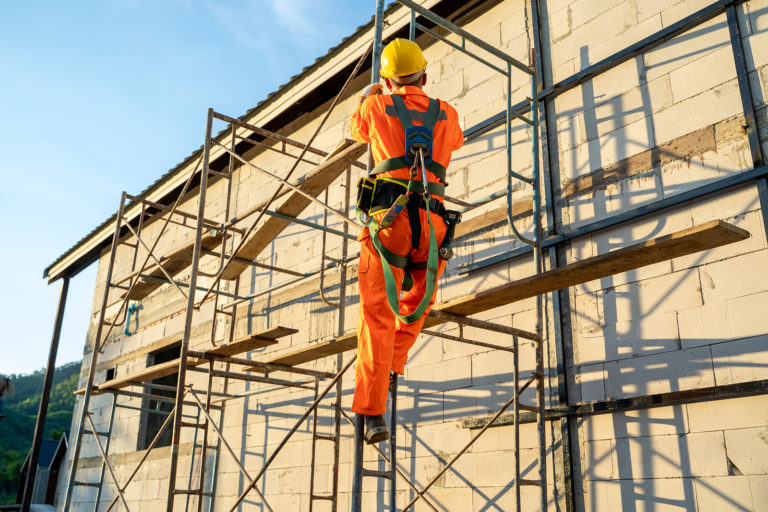
One of the most common questions Safety Counselling receives from contractors, project managers, and business owners throughout Albuquerque and New Mexico is, “At what height does OSHA actually require fall protection?”
It’s a reasonable question, but it often leads to one of the biggest misconceptions in workplace safety.
Many employers believe workplace fall protection requirements begin only when an employee reaches a specific height, such as six feet above the ground. While OSHA does establish trigger heights for guardrails, personal fall arrest systems, and other protective equipment, those requirements are only part of the overall picture.
The requirement that often surprises employers is that fall protection training begins long before an employee ever leaves the ground.
Under OSHA regulations, employees must receive fall protection training before they are exposed to any fall hazard, regardless of height.
For more than five decades, Safety Counselling has helped New Mexico employers develop practical workplace safety programs that protect employees while meeting OSHA compliance requirements. One of the most common compliance issues encountered during safety audits is the mistaken belief that fall protection safety training can wait until employees begin working six feet or more above a lower level.
OSHA does not see it that way.
Whether employees are installing roofing materials, erecting scaffolding, connecting structural steel, working from aerial lifts, or simply preparing to begin elevated work, they should already understand the hazards they may encounter and the procedures required to protect themselves.
Proper training is the foundation of every effective fall protection program.
The Zero-Foot Rule: Your Legal Training Responsibility

Under OSHA Standard 29 CFR 1926.503, employers are required to provide fall protection training for every employee who may be exposed to fall hazards.
The timing is important.
That training must occur before employees begin work that exposes them to a potential fall.
Safety Counselling has found that this requirement is frequently overlooked by employers who focus primarily on equipment instead of employee preparation. During OSHA inspections following workplace incidents, training documentation is often one of the first items compliance officers request.
If employees cannot demonstrate they received proper fall protection training before beginning work, an employer may already be out of compliance, even if no one has climbed a ladder or stepped onto a roof.
Employees performing work in any of the following situations should already understand the fundamentals of fall protection:
- Roofing projects
- Scaffold erection and dismantling
- Structural steel construction
- Equipment maintenance
- Elevated platforms
- Leading edges
- Floor openings
- Wall openings
- Ladder safety
- Personal fall arrest systems
Every employee should understand:
- How to recognize fall hazards before work begins.
- Which fall protection systems apply to the work being performed.
- How to properly inspect fall protection equipment.
- How to correctly wear and use personal fall arrest systems.
- Their responsibilities under the company’s written safety program.
Safety Counselling has observed that companies investing in quality training experience more than improved OSHA compliance. Employees become more confident identifying hazards, supervisors make better safety decisions, and crews develop habits that help prevent serious injuries before they occur.
Good training protects people long before equipment is ever needed.
Understanding Trigger Heights: Equipment Requirements vs. Training Requirements

This is where confusion often begins.
OSHA establishes specific trigger heights that determine when employers must provide physical fall protection systems such as guardrails, safety nets, or personal fall arrest systems.
Those trigger heights vary depending on the type of work being performed.
Training requirements do not.
Every employee who may be exposed to a fall hazard should receive appropriate training before beginning work, regardless of the height involved.
Understanding the difference between equipment requirements and training requirements is essential for maintaining OSHA compliance.
General Construction Work (29 CFR 1926.501)
Trigger Height: 6 Feet
For most construction activities, employees working six feet or more above a lower level must be protected using one or more approved fall protection systems.
These may include:
- Guardrail systems
- Safety net systems
- Personal fall arrest systems, including harnesses and lanyards
Many contractors assume six feet is the point where OSHA requirements begin. Safety Counselling regularly explains that six feet is the equipment trigger—not the training trigger.
Employees should already understand how to inspect, wear, and properly use this equipment before they are ever exposed to elevated work.
Scaffolding Work (29 CFR 1926.451)
Trigger Height: 10 Feet
Employees working from supported or suspended scaffolds generally require guardrails or personal fall arrest systems once they reach 10 feet above a lower level.
Scaffold work presents unique hazards that extend beyond fall protection alone. Employees should also understand scaffold inspections, safe access procedures, load capacities, and the importance of recognizing damaged or improperly assembled components before work begins.
Safety Counselling frequently works with scaffold crews throughout New Mexico and has found that consistent training significantly reduces unsafe work practices while improving overall jobsite awareness.
Steel Erection (29 CFR 1926.760)
Trigger Height: 15 Feet
Employees engaged in most structural steel erection activities must be protected by approved fall protection systems beginning at 15 feet.
Structural steel work often combines multiple hazards, including changing work elevations, moving materials, crane operations, weather conditions, and limited walking surfaces.
Because of these changing conditions, fall protection planning should begin well before steel arrives on the jobsite.
Steel Connectors (29 CFR 1926.760)
Trigger Height: 30 Feet
OSHA provides a limited exception for qualified steel connectors actively assembling structural steel.
Under specific conditions, these employees may work up to 30 feet before tying off, provided they are wearing the required equipment and have received specialized training appropriate for their duties.
This exception is often misunderstood.
It does not eliminate training requirements or reduce an employer’s responsibility to protect workers. Instead, it recognizes the unique nature of structural steel connection work while still requiring employers to provide proper equipment, planning, supervision, and employee training.
Understanding OSHA’s trigger heights allows employers to select the appropriate fall protection systems for each project while ensuring employees receive the training required before work begins.
For experienced safety professionals, one principle remains constant: equipment alone does not prevent falls. Well-trained employees who recognize hazards before work starts are often the strongest line of defense against workplace injuries.
Continuing from Part 1, this section follows the Safety Counselling Editorial Style Guide and maintains the same authoritative third-person voice.
The Fall Protection Compliance Challenge for New Mexico Contractors
Construction activity continues to expand throughout Albuquerque and across New Mexico. New commercial developments, residential communities, infrastructure improvements, utility projects, and industrial facilities create opportunities for contractors while also increasing the importance of workplace safety and OSHA compliance.
As projects become larger and more complex, employers face greater responsibility for protecting employees from fall hazards and maintaining accurate safety documentation.
According to the New Mexico Regulation and Licensing Department (NMRLD) and its Construction Industries Division (CID), approximately 14,000 to 15,000 licensed individual contractors are available for hire throughout the state. When business entities, specialty contractors, qualifying parties, and registered contracting companies are included, the total exceeds 59,000 active contractor licenses and registered businesses representing more than 70 different license classifications.
Those classifications include nearly every segment of the construction industry, including:
- General construction
- Commercial construction
- Residential construction
- Electrical contractors
- Plumbing contractors
- Mechanical contractors
- Asphalt paving contractors
- Specialty construction trades
Each of these industries presents unique workplace hazards, yet fall protection remains one of OSHA’s most closely monitored safety requirements.
Safety Counselling has worked alongside New Mexico contractors for more than five decades and has found that companies of every size face many of the same compliance challenges. Smaller contractors often have limited safety resources, while larger organizations must manage multiple crews, subcontractors, and changing jobsite conditions across numerous projects.
Regardless of company size, every employer shares the same responsibility to protect employees from preventable falls.
As construction activity increases throughout Albuquerque, Rio Rancho, Santa Fe, Las Cruces, Farmington, Hobbs, and other New Mexico communities, regulatory agencies continue emphasizing workplace safety. The Construction Industries Division and OSHA frequently work toward the common goal of improving jobsite safety and reducing workplace injuries.
For employers, that means safety should never be treated as paperwork completed only to satisfy an inspection.
An effective safety program should become part of daily operations.
Experienced safety professionals at Safety Counselling routinely encourage employers to think beyond minimum compliance requirements. Companies that invest in ongoing safety education, regular job site inspections, and employee involvement often discover that workplace safety improves productivity, reduces downtime, and helps build stronger relationships between management and field personnel.
Employees who understand why safety procedures exist are generally more likely to follow them.
That understanding begins with quality training.
What OSHA Looks for During a Safety Inspection
One of the most common misconceptions Safety Counselling encounters is the belief that OSHA inspectors only focus on whether employees are wearing harnesses or other fall protection equipment.
Proper equipment is certainly important, but OSHA evaluates much more than what workers are wearing on the day of an inspection.
Compliance officers typically look for evidence that an employer has developed and implemented a complete fall protection program. That includes employee training, written documentation, equipment inspections, hazard assessments, and supervisor involvement.
During an OSHA inspection, employers should be prepared to demonstrate that employees understand the hazards associated with their work and know how to use fall protection equipment correctly.
Safety Counselling has found that documentation frequently becomes one of the most valuable tools an employer has during an inspection. Accurate records help demonstrate that safety training has been provided, equipment has been inspected, and employees have received the instruction necessary to perform their jobs safely.
Under OSHA requirements, fall protection training should be provided by a qualified individual who can teach employees to recognize hazards and properly use the fall protection systems required for their specific work activities.
A well-developed fall protection training program should include instruction on:
- Identifying fall hazards unique to each jobsite.
- Proper procedures for erecting, inspecting, maintaining, and dismantling fall protection systems.
- Correct use of guardrail systems, personal fall arrest systems, safety nets, warning lines, and safety monitoring systems.
- Safe operation of mechanical equipment during low-slope roofing activities.
- Proper handling, storage, and placement of tools and materials to reduce falling object hazards.
- Employee responsibilities under the company’s written safety program.
- Recognizing changing jobsite conditions that may introduce new fall hazards.
Experienced instructors at Safety Counselling have observed that employers who consistently reinforce these topics often experience measurable improvements beyond OSHA compliance alone. Supervisors become more proactive, employees are more confident identifying hazards, and near misses are more likely to be reported before they become serious incidents.
Safety is not built during an OSHA inspection.
It is built through planning, communication, leadership, and consistent training that takes place every day employees report to work.
One of the most valuable lessons learned from decades of workplace safety consulting is that written safety programs and training records are only part of the process. Those documents become truly effective when employees understand them, supervisors reinforce them, and management demonstrates a genuine commitment to protecting every member of the workforce.
When those elements work together, companies often experience fewer injuries, fewer project interruptions, lower workers’ compensation costs, and a stronger overall culture of safety.
That is the goal every employer should strive to achieve.
Frequently Asked Questions
Who on the crew needs fall protection training?
Any employee who may be exposed to a fall hazard should receive fall protection training before beginning work.
This includes employees working at height, employees working near roof edges, employees using scaffolds, and employees working around floor openings, wall openings, ladders, platforms, aerial lifts, or leading edges.
Common examples include:
- Roofers
- Framers
- Scaffold crews
- Structural steel workers
- Stucco crews
- Maintenance personnel
- Foremen
- Supervisors
- Project managers responsible for overseeing exposed employees
Safety Counselling often reminds employers that supervisors need to understand fall protection requirements just as clearly as the employees performing the work. A supervisor who cannot recognize an unsafe condition may allow a hazard to continue until someone is injured or an OSHA inspection occurs.
Training should apply to the people wearing the equipment and the people responsible for enforcing the safety program.
What is the difference between an Awareness course and a Qualified Person course?
An Awareness course is designed for employees who need to recognize fall hazards, understand basic OSHA requirements, and properly use assigned personal protective equipment.
This type of training is commonly appropriate for field employees who work around fall hazards but are not responsible for designing, approving, or supervising fall protection systems.
A Qualified Person course provides a deeper level of instruction.
Qualified Person training is generally intended for supervisors, safety managers, competent persons, and other responsible personnel who must evaluate hazards, oversee fall protection systems, review equipment limitations, and make decisions that affect OSHA compliance.
Safety Counselling recommends that employers carefully match training levels to job responsibilities. A roofer using a harness needs strong practical training. A supervisor responsible for selecting anchor points, evaluating fall clearance, or approving a fall protection plan needs more advanced instruction.
Both roles matter.
Is classroom instruction enough?
No.
Classroom instruction is an important part of fall protection training, but it should not be the only part.
Employees need to understand OSHA regulations, hazard recognition, equipment limitations, and safe work procedures. However, reading regulations or watching a presentation does not fully prepare a worker to safely inspect equipment, fit a harness, connect a lanyard, or respond to changing jobsite conditions.
Effective fall protection training should combine:
- Classroom instruction
- Hands-on equipment demonstrations
- Harness inspection and fitting
- Practical exercises
- Discussion of jobsite-specific hazards
- Written testing or knowledge verification
Experienced instructors at Safety Counselling have found that hands-on training helps employees retain information more effectively. Workers are more likely to remember how to inspect webbing, check D-ring placement, adjust leg straps, and recognize damaged equipment when they physically practice those steps under qualified instruction.
That practical experience can make a real difference on an active job site.
Protect Your Crew with Professional Fall Protection Training

Falls remain one of the leading causes of serious injuries and fatalities in the construction industry. For employers, that reality should make fall protection training a priority long before work begins at height.
A strong fall protection program protects employees, supports OSHA compliance, reduces liability, and helps businesses operate with greater confidence.
For more than 50 years, Safety Counselling, Inc. has helped New Mexico employers strengthen workplace safety through practical OSHA-compliant training and consulting. Safety Counselling works with contractors, manufacturers, municipalities, utilities, transportation companies, warehouses, and industrial employers throughout Albuquerque and across the state.
Safety Counselling’s instructor-led Fall Protection Training classes in Albuquerque combine classroom instruction with practical, hands-on equipment demonstrations. Employees learn how to recognize fall hazards, inspect personal fall arrest equipment, properly fit harnesses, understand trigger heights, and apply OSHA requirements to real jobsite conditions.
Whether a company needs to train one employee, certify an entire crew, refresh experienced workers, or improve its written safety program, Safety Counselling provides practical guidance built around real workplace needs.
To register employees or learn more about upcoming Fall Protection Training classes in Albuquerque, contact Safety Counselling today at 505-881-1112.