
Can Fall Protection Training Be Done Online?
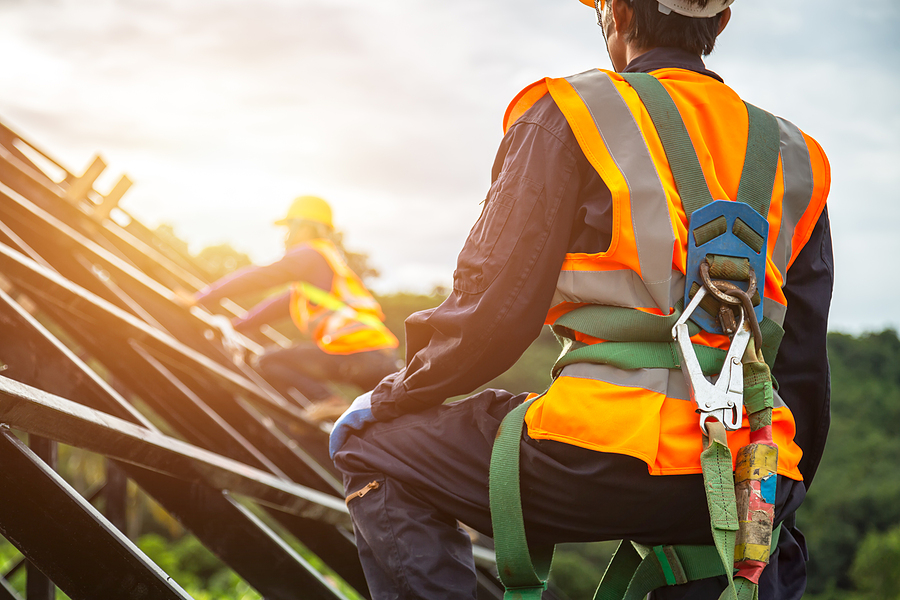
One of the most common questions Safety Counselling receives from contractors, business owners, supervisors, and safety managers throughout Albuquerque and New Mexico is whether employees can complete fall protection training entirely online.
The question is understandable.
Online training is convenient, employees spend less time away from the jobsite, and it often appears to be a cost-effective solution for busy employers. As more workplace training moves to digital platforms, many companies assume the same approach applies to OSHA fall protection training.
Unfortunately, that assumption can create a significant gap in a company’s safety program.
Safety Counselling has worked with New Mexico employers since 1973 and has found that many businesses believe completing an online course is enough to satisfy OSHA’s fall protection training requirements. While online instruction can be an effective way to introduce employees to OSHA regulations and basic fall protection concepts, it is only one part of a complete training program.
Employees who work at height need more than theoretical knowledge.
They need practical experience using the same equipment they will rely on when working on rooftops, scaffolding, structural steel, aerial lifts, elevated platforms, and other locations where fall hazards exist.
The short answer is straightforward.
No. Fall protection training cannot be completed entirely online.
OSHA allows employers to use online instruction for classroom education, but OSHA regulations and nationally recognized safety standards make it clear that employees should also receive instructor-led, hands-on training before they are exposed to workplace fall hazards.
Watching a training video or completing an online module does not teach an employee how to properly inspect a harness, adjust shoulder and leg straps, evaluate an anchor point, calculate fall clearance, or recognize damaged equipment before stepping onto an active jobsite.
Those skills require practical instruction under the guidance of a qualified instructor.
Safety Counselling has found that employees gain confidence much more quickly when they physically handle the equipment, ask questions, and practice proper procedures in a controlled training environment. That experience helps reinforce classroom instruction while preparing workers to recognize hazards before they become serious incidents.
A successful fall protection program combines knowledge with experience.
Both are essential.
The False Sense of Security Created by an Online Safety Card
Under OSHA Standard 29 CFR 1926.503, employers are responsible for ensuring employees receive fall protection training from a competent person before they are exposed to fall hazards.
Many employers misunderstand what that requirement means.
Completing an online course and receiving a certificate may create the impression that an employee is fully prepared to work safely at height. However, OSHA expects employees to do much more than understand terminology or answer multiple-choice questions.
Employees should be able to demonstrate that they can safely inspect, wear, adjust, and use fall protection equipment in real working conditions.
Safety Counselling frequently works with employers who use online training as the classroom portion of their overall safety program. This approach can be effective because it introduces employees to OSHA regulations, hazard recognition, equipment terminology, and the basic principles of fall protection before practical instruction begins.
The classroom portion provides an important foundation.
The hands-on portion builds the skills employees need to safely perform their jobs.
During instructor-led training, employees should physically demonstrate their ability to:
- Inspect a harness for cuts, burns, excessive wear, damaged stitching, and other signs of deterioration.
- Properly adjust shoulder straps, chest straps, and leg straps for a secure fit.
- Identify approved anchor points capable of supporting required loads.
- Correctly connect lanyards, lifelines, and connectors.
- Understand fall clearance requirements before beginning work.
- Perform buddy inspections before entering an elevated work area.
These practical skills cannot be accurately evaluated by completing an online presentation or clicking through a series of training slides.
Safety Counselling has observed that employers who invest in practical, instructor-led training often see improvements well beyond OSHA compliance. Employees become more comfortable using their equipment, supervisors are better prepared to recognize unsafe work practices, and crews develop greater confidence working around elevated hazards.
ANSI safety standards reinforce this same philosophy by emphasizing that employees should demonstrate competency through practical application—not simply classroom instruction.
When practical evaluations are missing, employers may have difficulty demonstrating that workers have been fully trained during an OSHA inspection or following a workplace incident.
For employers throughout Albuquerque and New Mexico, combining online education with hands-on instruction provides the strongest approach to building a safer, more knowledgeable workforce.
Continuing from Part 1, this section follows the Safety Counselling Editorial Style Guide and maintains the same authoritative, third-person voice. It is based on your uploaded article and editorial guide.
Frequently Asked Questions
Can employees complete the classroom portion of fall protection training online?
Yes.
Online instruction can be an effective way to introduce employees to OSHA regulations, hazard recognition, fall protection terminology, and the basic principles of working safely at height.
Many New Mexico employers use online education as the first step in their overall fall protection training program. It allows employees to learn the fundamentals before participating in instructor-led, hands-on training.
Safety Counselling has found that this blended approach often provides the best learning experience. Employees arrive at practical training with a stronger understanding of OSHA requirements, allowing instructors to spend more time reinforcing safe work practices and demonstrating proper equipment use.
However, online instruction should never be viewed as the final step.
Before employees begin work where fall hazards exist, they should participate in documented, instructor-led training that allows them to apply what they have learned in realistic workplace situations.
Both components work together to create a complete fall protection program.
What happens if OSHA discovers employees only completed an online fall protection course?
If an OSHA compliance officer determines employees have not received the practical instruction necessary to safely perform their assigned work, an employer could face citations for inadequate fall protection training.
During an inspection, OSHA is not simply looking for a training certificate.
Compliance officers want to see evidence that employees understand how to safely inspect equipment, properly wear personal fall arrest systems, recognize jobsite hazards, and correctly use the equipment required for their specific work activities.
Safety Counselling regularly reminds employers that documentation is only one part of OSHA compliance.
Employees should also be capable of demonstrating safe work practices in the field.
Training records, practical evaluations, equipment inspections, and supervisor involvement all work together to demonstrate that a company has developed an effective safety program rather than simply completing paperwork.
Companies that combine classroom education with hands-on instruction are generally in a much stronger position during OSHA inspections than employers relying exclusively on online courses.
Why is hands-on training so important for something as basic as a body harness?
At first glance, a body harness appears relatively simple to use.
Field experience tells a different story.
Safety Counselling has observed employees unknowingly wear chest straps too high or too low, leave leg straps improperly adjusted, connect lanyards incorrectly, overlook damaged webbing, or select anchor points that do not meet OSHA requirements.
These mistakes often are not obvious until an experienced instructor observes the employee using the equipment.
That is one of the greatest advantages of hands-on training.
Employees receive immediate feedback while learning the correct procedures in a controlled environment rather than discovering mistakes on an active jobsite.
Practical instruction allows employees to practice:
- Inspecting harnesses before every use.
- Properly fitting personal fall arrest equipment.
- Selecting appropriate anchor points.
- Understanding fall clearance requirements.
- Connecting lanyards and lifelines correctly.
- Performing buddy inspections before work begins.
- Recognizing damaged or defective equipment that should be removed from service.
Safety Counselling has found that employees retain these skills far more effectively through repetition and supervised practice than through classroom instruction alone.
Confidence develops through experience.
That experience can help employees make better decisions when working around elevated hazards, changing jobsite conditions, and unfamiliar equipment.
One of the most valuable lessons employers can learn is that fall protection equipment is only as effective as the person using it.
Well-trained employees remain one of the strongest defenses against preventable workplace injuries.
Why Taking the Cheapest Shortcut Can Become the Most Expensive Decision
Every business operates within a budget, and it’s understandable that employers look for efficient ways to train their workforce. Online learning can reduce travel time, simplify scheduling, and lower training costs.
However, workplace safety is one area where choosing the least expensive option can create far greater costs later.
Safety Counselling has worked with employers throughout Albuquerque and New Mexico for more than five decades and has found that many workplace incidents are not caused by a lack of equipment. More often, they result from employees not fully understanding how to inspect, adjust, or properly use the equipment they have been provided.
An employee who understands fall protection in theory but has never physically handled a harness or practiced connecting a lanyard may hesitate when faced with a real hazard. Others may unknowingly misuse equipment, overlook damaged components, or select unsafe anchor points because they have never received practical instruction.
These are exactly the types of situations OSHA and ANSI standards are designed to prevent.
Training should prepare employees for real working conditions—not simply help them pass an online quiz.
Throughout Albuquerque and across New Mexico, employees routinely work on commercial construction projects, residential developments, manufacturing facilities, warehouses, utility systems, transportation infrastructure, municipalities, and industrial sites where fall hazards are part of everyday operations.
Every one of these environments presents unique challenges.
Changing weather conditions, multiple contractors working simultaneously, uneven surfaces, moving equipment, confined workspaces, and evolving jobsite conditions all require employees to make safe decisions in real time.
Safety Counselling has found that employees who participate in instructor-led, hands-on training develop greater confidence when working at height because they have already practiced the procedures, they will be expected to perform in the field.
That confidence often leads to better decision-making, stronger hazard recognition, and improved communication among crew members.
Effective fall protection programs do more than satisfy OSHA requirements.
They help build a workplace culture where employees understand that safety is part of every task, every shift, and every project.
Companies that consistently invest in employee training often experience additional benefits, including:
- Fewer workplace injuries.
- Improved OSHA compliance.
- Better hazard recognition.
- Greater employee confidence.
- Reduced project interruptions.
- Lower workers’ compensation costs.
- Stronger communication between supervisors and field personnel.
- A more consistent culture of workplace safety.
Field experience has shown that these long-term benefits frequently outweigh the initial investment in quality training.
A comprehensive fall protection program should always combine classroom education with practical instruction, so employees understand both the OSHA requirements and the real-world application of the equipment they use every day.
Prepare Your New Mexico Team with Comprehensive Fall Protection Training
For more than 50 years, Safety Counselling, Inc. has helped contractors, manufacturers, municipalities, utility companies, transportation organizations, warehouses, industrial facilities, and businesses throughout Albuquerque and New Mexico build safer workplaces through practical OSHA-compliant training and consulting.
Safety Counselling’s Fall Protection Training program combines classroom instruction with instructor-led, hands-on demonstrations using the same types of equipment employees encounter on active job sites.
Participants learn how to:
- Inspect fall protection equipment before every use.
- Properly fit and adjust personal fall arrest systems.
- Select appropriate anchor points.
- Understand fall clearance requirements.
- Recognize common fall hazards.
- Apply OSHA requirements to real workplace situations.
- Build confidence using fall protection equipment before entering hazardous work areas.
Safety Counselling’s instructors understand that every workplace presents different challenges. That is why each course emphasizes practical application, hazard recognition, employee involvement, and the development of safe work habits that employees can carry back to their own jobsites.
Whether an employer needs to train a single employee, certify an entire construction crew, provide refresher training, or strengthen an existing workplace safety program, Safety Counselling offers practical solutions built around the realities of today’s workplaces.
Since 1973, Safety Counselling has earned the trust of employers across New Mexico by delivering professional safety consulting, OSHA, DOT, and MSHA training, workplace inspections, written safety programs, and hands-on instruction that helps businesses protect both their employees and their operations.
To learn more about upcoming Fall Protection Training classes in Albuquerque or to discuss workplace safety consulting services, contact Safety Counselling today at 505-881-1112.