
Construction Fall Protection Errors Building Contractors Should Never Permit
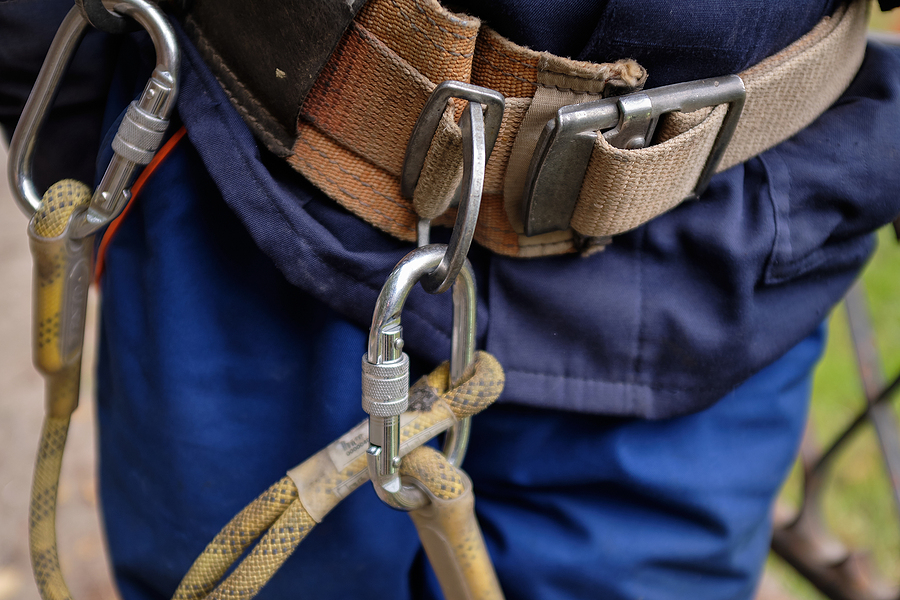
With the advent of cool new fall safety gear, it’s hard to understand why so many fall accidents continue to injure or kill workers. This article takes a look at a few of these fall protection failings that can be prevented.
Falling on the job (from the same or from a higher level) is the second most common work-related accident in the U.S., right after transportation accidents. The average treatment and compensation cost for every American worker who experienced a fall during working hours totals close to $100 billion annually.
As a matter of fact, these accidents, whether fatal or non-fatal, could be (and should be) avoided. And yet, they still continue to happen in the workplace (more frequently, it appears). At times, the workers may not be using any personal fall protection equipment (PFPE) at all. At other times, their safety gear may be sub-standard or faulty. So, what’s going wrong that causes fall accidents to persist, despite these state-of-the-art personal fall protection systems? Here are just a few reasons.
Misusing Your Fall Protection Gear
A number of safety experts think that the latest cause of workers’ injuries is the use of an incorrect fall protection gear for a particular work environment. Many workers think they are safe and secure but their PFPEs may not be protecting them as much as they think they do.
Training
There are three major requirements to make your fall protection gear work for you: Training for the proper use of PFPE, taking into account the specific task being performed by you (guidelines). Adherence to set procedures for using and maintaining your PFPE. Periodical inspection of your PFPE.
You should get trained in the right use of fall safety gear and on how to use it. Your employer should regularly inspect all the PFPE in your organization and have all the gear installed by a certified person.
Going up safe is more than using Fall Protection Gear
Fall Protection Gear usage is just part of a work-safe regime. The rest is knowledge about and respect for the hazard. Up high, there is always danger. It’s best to recognize and respect the fact that you are in the vicinity of great heights and then use the gear. Following the rules with the right Fall Protection Gear can only work when you’ve received the proper training and education. A great safety system should feel as if it is your extra pair of hands.
Double-check fall protection gear
Fall Protection Gear: don’t forget to check your gear
Fall Gear inspection: as in mount Everest! Why is it that important? Simple. Your fall protection gear is your safety. At height, it is literally your lifeline. So be doubly sure: don’t go up without checking your fall protection gear. Inspect and no inspection: no go.
Misconception about Horizontal Lifelines
And just when you thought that going Horizontal with your lifeline was a piece of cake, here is some bad news. Users have been found to disregard training and maintenance requirements of Horizontal Lifelines.
A horizontal lifeline is a rope. It is tied between two strong points (high places). The lifeline connects points so that the worker can attach himself to it and move around freely. No need to unhook from one point and re-hook to another! You must admit, it sounds like a cool idea. You can move more. And move faster.
Horizontal lifelines can save time. But the tradeoff is the demand for sturdier points to connect. The fall of a person from any height is a high impact force. Sometimes it is too high. Even a short distance can be too much for the fall arrest gear.
Critical Factoid. Safety starts and ends with the point on which the rope is connected. It is this point which can be the weakest link. In fact, it is often neglected.
Next comes clearance. It is often a calculation to determine the length of rope needed. A clearance calculation is also required to decide what length of rope to use. An engineer is often consulted for this aspect. This is to help users to appreciate the sag and deflection ratios. Calculations, huh? Sure, some people may not like it. But all it requires is a good knowledge of charts and formulas.
Roof hatches need rails
Absence of fall systems: contractors should never do it!
Do this, do that, do NOT ignore fall protection and still get on with your work. Oy! I can’t stress enough, be alert! Be smart. You know the drill. It is crucial you understand and follow safe working practices when working at heights. I often use the word culture. Work-safe, at heights is about creating a good safety culture.
Did you know that many companies are working hard to eliminate all hazard as their primary line of fall protection defense? It’s a very good idea. Did you also know that by doing this, they are saving money? Think of it: no need to keep on spending on recurring and constant retraining, retesting, recertification and reapplication of safety knowledge. Smart, isn’t it?
No hazard elimination? Fine. Try Alternative 2. The alternative comes into play where there are still residual fall hazards. How can fall hazards be stopped in their tracks? By installing robust barriers to prevent fall hazards! Observe closely. Old, but ever reliable fall stoppers like guard rails or full wall protection systems are top on the list. Isn’t that great? Even floor panels (more on this, here in our site) and overhead walkways (see previous post) can also be installed to prevent fall hazards!
Fall restraint (Safety harness): Safety harness! Ouch! What if the job calls for construction, construction activity to be done high, away from ground? Hmmm, that’s when Fall restraint comes in. In this technique, a worker puts on the PFPE before climbing up to work. The best part is that the worker will never be allowed close to the dangerous (free lengths) outer edges of a building!
Amazing, right? Something that might astound you. Designers are also required (finally) to put fall hazards on the list even when conceptualizing a design of a building. Take Europe for instance. For new buildings under construction, the authorities are making architects put (anchor) points in place. How great! A fantastic way to beat the expensive retrofitting!
Fall protection: general
Just realized that fall systems are getting to be more complex (can we say brain-scrambling?). Training can help get you out of this web. Here’s the great part about it. Make a point of undergoing regular training and you will be a happy man. You heard me right. There is a great need for this, and it is even more so, if you are a beginner. Think you can get too much of this? I doubt. Be regular in training and practice. A trained man at height, will go places, all the way safely!